I’ve spent a lot of time observing human behavior, and somewhere along the way, I realized we’re a pretty strange species.
So I wrote a field guide. About us.
*The Human Mammal Field Guide* takes a playful look at humanity from the perspective of an outside observer. Our habits, our contradictions, our peculiar rituals, and all the things we do that seem perfectly normal until somebody points them out.
It’s funny how ridiculous we can look when we stop taking ourselves so seriously.
To celebrate the opening of the **Liberty Truth Book Outlet**, I’m offering the digital edition for just **99 cents for the next two weeks!**
Come observe the human mammal in its natural habitat.
Most people hear the phrase harm reduction and assume it refers to compassion.
Less damage. Less risk. Less suffering.
On its surface, the idea seems uncontroversial. Who would argue against reducing harm?
But harm reduction, as it increasingly appears in modern systems, is not only a moral stance. It is also a structural technique — one that changes how harm is understood, distributed, justified, and eventually normalized.
This distinction matters.
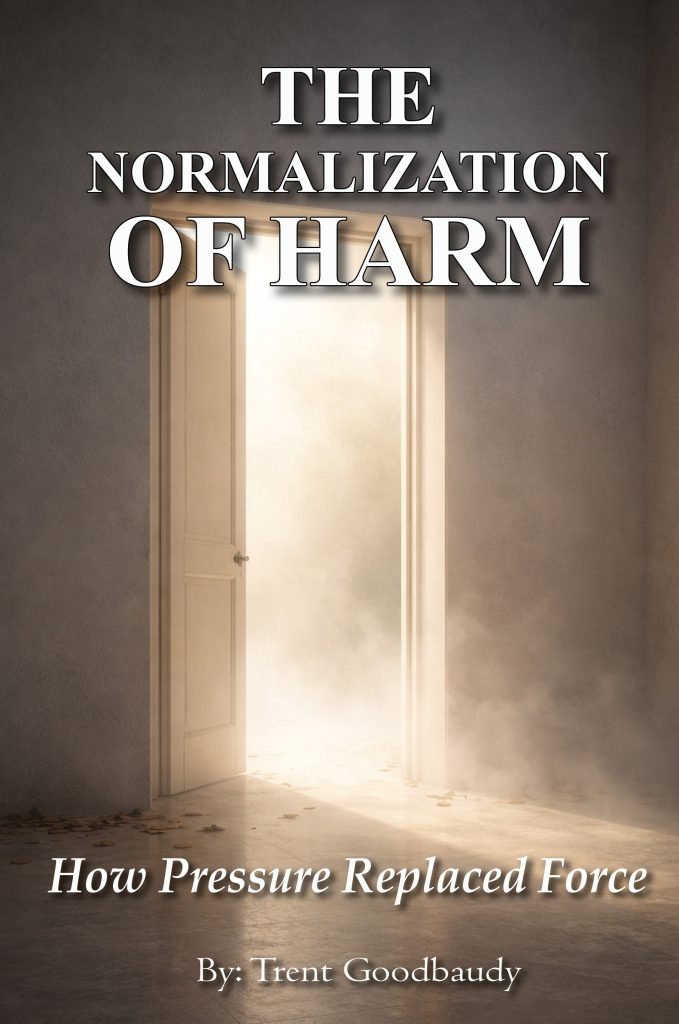
The Normalization of Harm was written to examine what happens when harm is no longer imposed through force, punishment, or explicit authority — but instead managed through coordination, tone, care, and internalized responsibility. Harm reduction is one of the clearest places where this shift can be observed.
Not because harm reduction is malicious. But because it often operates without asking what kind of harm is being reduced — and at what cost.
When harm becomes ambient
Traditional harm was visible.
It had a source. It had a moment. It had an aftermath.
Modern harm often doesn’t.
It arrives gradually, through policies, metrics, norms, and expectations that no single person authors and no single moment announces. Instead of force, it relies on pressure — the quiet kind that asks people to adapt rather than comply.
Harm reduction fits naturally inside this landscape.
By focusing on minimizing immediate damage, systems can avoid addressing deeper structural questions. Harm becomes something to be managed, not confronted. People are trained to accept tradeoffs quietly, to accommodate conditions incrementally, and to internalize responsibility for outcomes they did not design.
Nothing dramatic happens.
And because nothing dramatic happens, nothing feels wrong enough to challenge.
Pressure replaces force
One of the central observations in The Normalization of Harm is that modern systems rarely need to coerce. They coordinate instead.
They don’t command obedience. They encourage alignment. They don’t threaten punishment. They imply reasonableness.
Harm reduction often functions within this logic.
Rather than asking whether a system itself produces harm, attention shifts to whether individuals are managing their exposure responsibly. Risk becomes personal. Adaptation becomes virtuous. Dissent becomes unnecessary.
This does not require bad actors.
It requires careful people — people who want to be reasonable, compassionate, and cooperative.
And so harm is reduced in one dimension while quietly expanded in another.
The quiet cost of being reasonable
Harm reduction frameworks tend to reward smoothness.
Less disruption. Less conflict. Less resistance.
Over time, this produces a subtle narrowing:
Emotional responses are softened.
Language becomes cautious.
Creativity is filtered.
Relationships flatten.
Self-monitoring increases.
None of this registers as trauma.
In fact, it often feels like maturity.
People adapt. People function. People survive.
But adaptation has a cost when it becomes permanent — especially when no one is allowed to name it.
This is the kind of harm The Normalization of Harm is concerned with: not injury, but diminishment; not violence, but quiet erosion; not catastrophe, but accumulation.
Why naming harm matters
Harm that remains unnamed continues to operate.
When harm is reframed exclusively as something to be reduced, managed, or mitigated, it becomes difficult to ask more fundamental questions:
What is being normalized? Who is being asked to adapt? What capacities are quietly shrinking? What forms of life are becoming unavailable?
The Normalization of Harm does not argue against harm reduction as a moral impulse. It examines harm reduction as a structural pattern — one that can unintentionally obscure long-term cost by prioritizing short-term stability.
This book does not offer solutions. It does not propose reforms. It does not tell readers what to believe.
It simply maps how harm changes shape when pressure replaces force — and what happens to people when harm becomes something they are expected to manage internally.
A book without urgency
This book was written quietly, on purpose.
There is no call to action. No demand for agreement. No instruction to resist or reform.
The absence of pressure is not accidental. It mirrors the argument.
Readers are not asked to change their lives. They are invited to notice patterns they may already recognize — patterns that often go unnamed because they do not announce themselves loudly enough to justify concern.
If something resonates, it does so without urgency. If nothing does, nothing is lost.
This posture is deliberate.
Because the most effective pressure is the kind that feels like common sense — and the most enduring clarity is the kind that does not require persuasion.
LibertyTruth.org exists to examine how modern systems shape behavior without overt force — through language, incentives, norms, tone, and internalized regulation.
It is not a movement. It is not an ideology. It does not seek consensus.
The books published under LibertyTruth.org are designed to restore orientation rather than impose conclusions — offering language for experiences many people feel but struggle to name.
The Normalization of Harm is one part of a larger body of work exploring authority, adaptation, and the quiet mechanics of modern life — including an upcoming companion volume, Deferred Authority, which examines what happens when responsibility is endlessly postponed rather than imposed.
The only invitation LibertyTruth.org extends is attention.
What readers do with that attention remains their choice — quietly, deliberately, and without pressure.
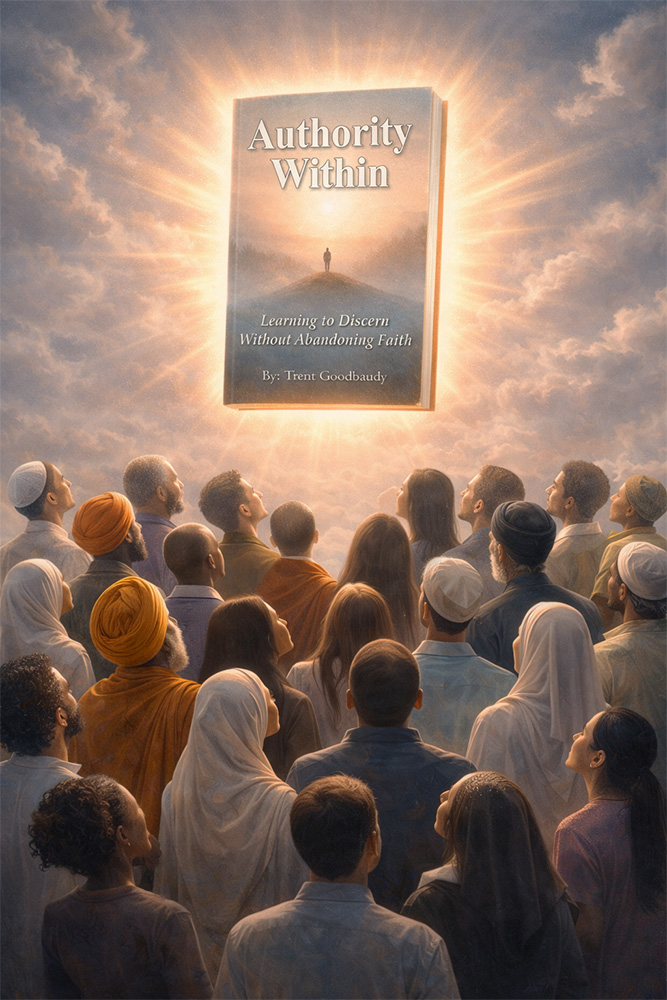
Authority Within was written for people who attend church every week, people who stopped going years ago, people who never went at all, and people who aren’t sure what they believe anymore—but still care deeply about meaning, responsibility, and truth.
If you’ve ever felt pressure to be certain when you weren’t… If you’ve ever sensed something quietly misaligned but didn’t have language for it… If you’ve ever wanted depth without dogma, faith without coercion, or clarity without performance…
This book was written with you in mind.
A Book That Doesn’t Ask You to Change Who You Are
One of the most important things to say upfront is this:
Authority Within does not ask you to abandon your beliefs.
If you are a Christian, Muslim, Jewish, spiritual, secular, agnostic, or undecided—nothing in this book requires you to move away from what matters to you.
It does not attack scripture. It does not argue against church, community, or tradition. It does not suggest that belief is naïve or inferior.
At the same time, it does not demand belief as an entry fee.
No one is asked to convert, defend, or explain themselves.
This book is not about what you believe.
It is about how authority operates quietly before belief ever enters the picture.
Why This Matters More Than Ever
We live in a time saturated with voices telling us what to think, how to live, who to trust, and what certainty should look like.
Some of those voices come from institutions. Some come from traditions. Some come from governments, movements, leaders, or ideologies. Some come from within—internalized over years of being told what clarity is supposed to feel like.
Often, authority doesn’t arrive loudly.
It arrives subtly.
It replaces discernment with certainty. It replaces responsibility with obedience. It replaces presence with explanation.
And most of the time, we don’t notice when it happens.
Authority Within is not a call to rebel against authority.
It is an invitation to notice where authority has quietly replaced something human and alive—and what returns when that replacement loosens.
For Those Who Go to Church
If you attend church, this book is not here to dismantle your faith.
In fact, many readers who remain committed to their faith find this work strengthens it.
Why?
Because it separates faith from pressure.
It distinguishes trust from certainty. It honors reverence without outsourcing responsibility. It allows belief to breathe instead of perform.
Many people of faith quietly carry questions they never speak—not because they lack devotion, but because they sense that faith was never meant to erase humanity.
This book gives those questions room without demanding answers.
For Those Who Left—or Are Thinking About It
If you’ve stepped away from church, tradition, or organized belief, this book is not asking you to justify that decision.
It is also not recruiting you into something new.
There is no alternative system waiting here. No replacement doctrine. No “better” framework to adopt.
Instead, the book explores something many people experience after leaving structure: the strange mix of relief, grief, clarity, and disorientation that comes when certainty falls away but meaning does not.
You are not broken for feeling that.
And you are not required to replace what you left in order to remain grounded, ethical, or whole.
For Those Who Never Fit Anywhere
Some people never fully belonged—to church, to ideology, to movements, or to labels.
Not because they were oppositional, but because something in them resisted replacement.
They noticed things early. They sensed misalignment before they could argue it. They often felt tired rather than angry, quiet rather than reactive.
This book speaks directly to that experience—not to validate it as special, but to normalize it as human discernment functioning without fanfare.
You are not alone in that.
You never were.
What This Book Does Differently
Authority Within does not teach.
It does not instruct. It does not diagnose. It does not provide steps, practices, or techniques.
Instead, it moves slowly through lived moments—moments where authority shifts, where explanation pauses, where silence completes something words cannot.
It includes pauses, interludes, and “discerned experiences” not as lessons, but as recognition points—places where readers often realize:
I’ve been here before.
Nothing needs to be applied. Nothing needs to be agreed with. Nothing needs to be proven.
Why This Book Is Important—for Everyone
This book matters because it restores something simple and easily lost:
The capacity to remain fully human without collapsing meaning.
It shows that:
responsibility does not require ideology
faith does not require pressure
clarity does not require certainty
belonging does not require belief
And that discernment—quiet, ordinary, unremarkable discernment—has been functioning all along.
When that is noticed, something stabilizes.
Not dramatically. Not spiritually. Not ideologically.
Humanly.
An Open Invitation
Whether you go to church or don’t. Whether you believe deeply or are unsure what belief even means anymore. Whether you are committed, questioning, resting, or rebuilding.
You are welcome here.
This book does not ask you to become someone else.
It simply invites you to notice what remains when nothing is being imposed.
That is why Authority Within matters.
Not because it tells you what to think—but because it gives you room to stand where you already are.
We talk a lot about “mental health” today—but we often talk about it in the wrong register.
When people imagine psychological strain, they tend to picture extremes: anger, instability, narcissism, emotional volatility, conflict. Loud symptoms. Visible breakdowns.
But for many people, mental strain doesn’t look dramatic at all.
Paintings That Show What It Feels Like To Be Over-Stimulated By SocietySOURCE
It looks like fatigue. It looks like mental fog. It looks like low motivation, indecision, quiet withdrawal, numbness, or a constant sense of being behind. It looks like knowing something is wrong but not being able to name it.
And one of the most overlooked contributors to this state is something so common we barely notice it anymore:
Noise.
We Are Surrounded by Noise — Even When It’s Silent
Noise is no longer just sound.
It’s information pressure. It’s notification density. It’s constant comparison. It’s opinion saturation. It’s emotional signaling. It’s urgency without necessity.
You can sit alone in a quiet room and still feel overwhelmed—because the noise is no longer external. It’s internalized.
Most people aren’t struggling because they’re broken. They’re struggling because their internal systems are overloaded.
Distraction Isn’t Just Annoying — It’s Fragmenting
The modern world rewards attention fragmentation.
Every app, platform, headline, and update competes for a slice of your awareness. None of them ask whether you’re already full. None of them ask whether your nervous system can handle more input.
Over time, this creates a subtle but damaging condition:
Thought without completion
Emotion without processing
Reaction without understanding
Decisions made under pressure rather than clarity
Eventually, the mind doesn’t rebel—it slows down.
This slowdown is often misread as laziness, depression, or disengagement. In reality, it’s often a protective response to overload.
Mental Health Strain Isn’t Always Loud
One of the most harmful myths is that mental strain must be obvious to be real.
But many people experiencing internal overload are:
Polite
Functional
Employed
Responsible
Quiet
They show up. They do what’s required. They don’t create problems.
Internally, though, they feel dull, tired, scattered, or disconnected from themselves. Not because they lack discipline or purpose—but because their internal signal has been buried under too much noise for too long.
Why “Fixing Yourself” Often Makes It Worse
The usual solutions offered by modern culture sound helpful:
Optimize your habits
Improve your mindset
Think more positively
Push through resistance
Consume better content
But many of these approaches add pressure rather than remove it.
If the issue is overload, adding more instructions—even well-meaning ones—can deepen exhaustion. What’s often missing is not motivation or insight, but quiet.
Not escapism. Not denial.
Quiet.
Quiet Is Not Doing Nothing — It’s Removing Interference
Quiet doesn’t mean disengaging from life or responsibility. It means restoring internal conditions where clarity can emerge naturally.
When noise recedes:
Thoughts organize themselves
Emotional intensity decreases
Decisions feel less forced
Timing becomes clearer
Fatigue begins to lift
This is not because you “worked on yourself,” but because you stopped drowning your system in unnecessary input.
Where the Liberty Truth Work Fits In
The Liberty Truth series was written for this exact condition—not crisis, not pathology, not performance psychology, but signal recovery.
These books are not about:
Fixing you
Diagnosing you
Labeling you
Training you to perform better
They are about helping you remove noise—internally and externally—so that your own discernment can function again.
Many readers discover that what they thought was a personal flaw was actually interference. That what they assumed was emotional weakness was often overload. That clarity doesn’t need to be manufactured—it needs space.
The work does not demand urgency. It does not ask you to adopt beliefs. It does not push action.
It slows the internal environment enough for accuracy to return.
Quiet Changes How Mental Health Is Experienced
When noise is reduced, mental health shifts in subtle but powerful ways:
Less internal self-criticism
Fewer mental loops
Reduced emotional reactivity
More tolerance for uncertainty
A return of natural energy
Not because life becomes easy—but because it becomes clearer.
This Is Not About Escaping the World
The world will remain loud. Distractions will multiply. Information will accelerate.
The question is not whether noise exists.
The question is whether it gets to decide what happens inside you.
Quiet is not withdrawal. It is sovereignty over your internal space.
A Closing Thought
If you’ve been tired without knowing why… If you’ve felt mentally scattered but not broken… If you’ve sensed that something is off but couldn’t name it…
It may not be a flaw. It may not be a disorder. It may not be something you need to fix.
It may simply be too much noise—and not enough space for clarity to return.
The Liberty Truth series exists to help readers quiet internal interference, restore discernment, and move through the world with less pressure and more accuracy—without being told who to become or how to perform.
Some books give you answers. Some give you tools. Some tell you what to fix.
Quiet Contact does something far rarer.
It gives you permission to stop running—without asking you to collapse, confess, or explain yourself.
From the first pages, this book makes something clear: pain isn’t the problem. Avoidance is. And avoidance doesn’t look like fear the way we’ve been taught. It looks like strength. Productivity. Insight. Positivity. Patience. Being the reliable one. Being the calm one. Being “fine.”
What makes Quiet Contact extraordinary is how gently it exposes these patterns without ever turning the reader into a problem to solve.
There is no urgency in this book. No pressure to heal. No demand to perform growth.
Instead, it introduces a different idea: that real change happens not through intensity, but through contact—small, tolerable, honest moments of presence that your system can actually stay with.
As you read, something subtle happens. You don’t feel pushed forward. You feel slowed down. You start noticing how often you move away from yourself without realizing it. And you notice it without shame.
One of the most powerful aspects of Quiet Contact is what it refuses to do. It doesn’t tell you to face everything. It explicitly explains when not to engage—when distance is appropriate, when timing is wrong, when stability matters more than insight. That alone sets it apart from most books in this space.
By the time you reach the end, there is no dramatic breakthrough. No catharsis. No identity shift.
There’s just more space.
Less reactivity. Fewer internal negotiations. Less need to explain yourself—to others or to yourself.
You don’t feel like someone new.
You feel less divided.
This is a book for people who are functional but tired. Aware but unsettled. Skeptical of being pushed. It’s for leaders, thinkers, creators, and anyone who has learned to endure quietly—and is ready to stop moving away from themselves without being told what to do next.
Quiet Contact doesn’t promise transformation.
It offers something better: relief that arrives quietly—and stays.
If you’ve spent years studying the Law of Attraction, the Law of Assumption, or the teachings of Neville Goddard, you already know something important:
And yet—for many sincere students—results never quite stabilized.
Some things worked briefly. Some manifestations appeared and vanished. Some never arrived at all.
Eventually, a quiet question crept in:
If this is true… why does it still feel like work?
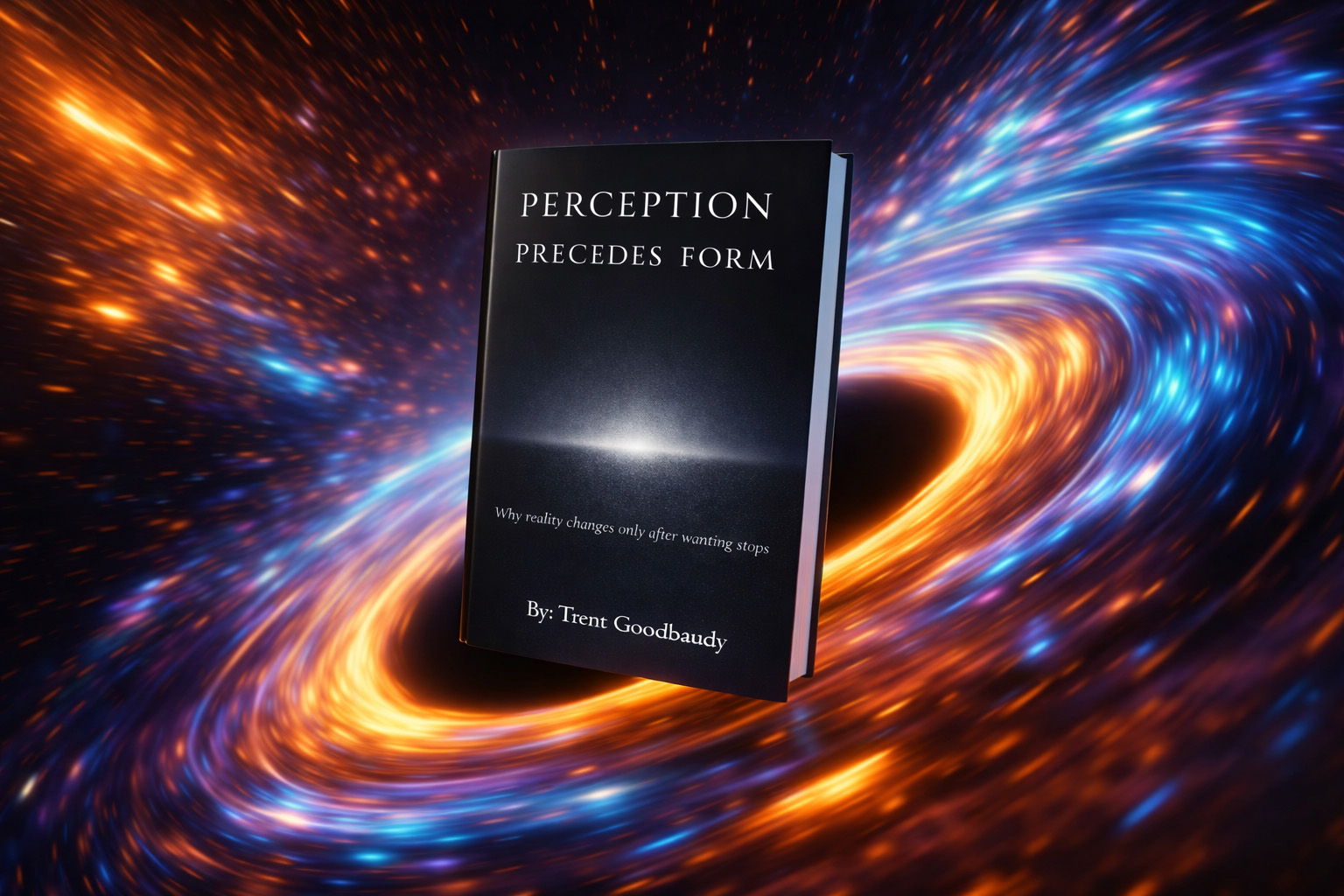
That question is where Perception Precedes Form begins.
This Is Not Another Manifestation Book
Let’s be clear from the start: Perception Precedes Form is not a Law of Attraction manual.
There are:
No affirmations
No visualization techniques
No instructions to “persist in the state”
No encouragement to manage your thoughts or feelings
And that’s precisely why it lands.
This book is written for readers who already understand manifestation concepts—but found themselves trying to execute them.
Holding the feeling. Maintaining the assumption. Monitoring themselves to make sure they didn’t “fall out of alignment.”
What this book does—quietly and precisely—is show why that effort was never the solution.
The Core Insight Most LOA Teachings Never Address
One of the most disorienting realizations for serious Law of Attraction students is this:
The more you try to apply the teaching, the less natural the results feel.
Perception Precedes Form names what most manifestation frameworks avoid:
Wanting eventually becomes interference.
Not because desire is wrong—but because desire has a natural endpoint. When perception settles completely, wanting dissolves. And when wanting dissolves, effort becomes unnecessary.
Most LOA teachings stop short of this point.
They teach you how to:
Want correctly
Feel correctly
Believe correctly
This book asks a different question:
What happens when perception finishes adjusting and nothing needs to be held anymore?
Why Neville Goddard Readers Will Feel Seen
Neville Goddard repeatedly emphasized assumption, feeling, and inner conviction. But many of his readers were left with an unresolved tension:
How do I know when I’m doing it right?
Perception Precedes Form addresses that tension directly.
It explains why:
“Maintaining the feeling” often backfires
Neutrality is not failure, but accuracy
Outcomes often arrive quietly, not dramatically
Success doesn’t feel euphoric when perception has already settled
For Neville readers who felt they understood the ideas but couldn’t stop managing themselves, this book offers relief—not by adding clarity, but by removing pressure.
A Book That Doesn’t Ask You to Do Anything
One of the most radical aspects of Perception Precedes Form is what it refuses to do.
It does not ask you to:
Practice
Apply
Remember
Improve
Believe
It describes internal mechanics instead of prescribing behavior.
This is unsettling at first—especially for readers conditioned to think progress requires participation. But that discomfort is part of the recognition the book invites.
Many readers will realize something quietly startling:
They weren’t failing at manifestation.
They were over-involved.
Why This Book Feels Different (and Why That Matters)
Most Law of Attraction books feel motivational. This one feels accurate.
Most manifestation books promise change. This one explains why change follows.
Most LOA teachings amplify emotion. This book lets emotion settle.
And because of that, it does something rare:
It leaves the reader calmer than when they started—without telling them to be calm.
Who This Book Is For (and Who It Isn’t)
This book is for you if:
You’ve studied manifestation deeply but felt something was missing
You grew tired of managing your inner state
You sensed truth in Neville Goddard but struggled with execution
You’re done trying to “stay aligned”
This book is not for you if:
You want steps, techniques, or quick results
You’re looking for emotional highs or motivational language
You believe success requires constant effort
Final Verdict
Perception Precedes Form feels like the book you find after manifestation stops working.
Not because the ideas were wrong—but because they were often held too tightly.
For Law of Attraction and Neville Goddard readers who are ready to stop trying and start recognizing, this book doesn’t just add to the conversation.
It finishes a sentence many didn’t realize was incomplete.
📖 Perception Precedes Form Published by LibertyTruth.org
Over the last few decades, “emotional intelligence” has become a cultural banner. It appears in leadership seminars, therapy offices, corporate trainings, social media clips, and bestselling books. It promises awareness, empathy, self-regulation, and better outcomes—at work, in relationships, and in life.
And for many people, it does offer an entry point.
But entry points are not destinations.
At LibertyTruth.org, we are not trying to improve the emotional-intelligence conversation. We are not refining it, modernizing it, or repackaging it with better language. We are addressing something more foundational—something that much of popular psychology quietly avoids.
This work begins where feel-good frameworks stop working.
The Emotional Intelligence Industry: What It Gets Right—and Where It Fails
Let’s be precise and fair.
Mainstream emotional-intelligence frameworks have contributed real value:
They helped normalize emotional awareness.
They pushed back against repression and emotional illiteracy.
They encouraged empathy and interpersonal sensitivity.
They gave language to experiences people previously lacked words for.
But over time, something subtle happened.
Emotional intelligence became emotional management. Then emotional management became emotional performance. And emotional performance slowly turned into emotional identity.
Today, much of the field operates on unspoken assumptions:
That emotions must be expressed to be processed
That discomfort must be resolved to be healthy
That validation equals healing
That clarity comes from talking things through
That regulation means calming or reframing feelings
These assumptions sound benign. Often they are comforting.
They are also incomplete.
Where Popular Psychology Quietly Breaks Down
Liberty Truth exists because many people reach a point where the standard tools no longer help—and no one explains why.
Common experiences we hear from readers:
“I understand my emotions, but I still feel stuck.”
“I can name what I’m feeling, but it doesn’t change anything.”
“I’ve done the work, but something still feels off.”
“I’m calm, but not clear.”
“I’m regulated, but not grounded.”
These are not failures of effort. They are failures of framework.
Most popular emotional-intelligence models focus on content:
What you feel
Why you feel it
How to express it
How to manage it
Liberty Truth focuses on structure:
How internal signals organize before emotion
How pressure accumulates before feeling labels appear
How identity interferes with perception
How reaction happens before thought
How stillness reveals information that expression cannot
This is not a therapeutic stance. It is an observational one.
Liberty Truth Is Not About Feeling Better
This is a crucial distinction.
Liberty Truth does not promise relief, comfort, catharsis, or emotional payoff. It does not offer affirmations, reframes, or motivational arcs. It does not aim to make readers feel understood.
Instead, it aims to make readers accurate.
Accuracy is quieter than validation. Accuracy is less flattering than encouragement. Accuracy does not rush to resolve tension.
But accuracy stabilizes.
Many Liberty Truth books intentionally avoid:
Step-by-step methods
Exercises
Techniques
“Try this” instructions
Prescriptive conclusions
This is not omission—it is design.
Because instruction often becomes interference.
The Central Premise Most Frameworks Miss
There is a premise that quietly governs the Liberty Truth body of work:
Many internal problems are not caused by emotion itself, but by intervening too early in the signal.
Popular emotional-intelligence approaches often teach people to:
Interpret quickly
Respond thoughtfully
Regulate actively
Reframe promptly
But what if clarity does not come from response at all?
What if:
Stillness precedes insight
Non-reaction reveals structure
Waiting is not avoidance
Silence is not suppression
Neutrality is not numbness
Liberty Truth examines what happens before emotion becomes narrative—and what happens when nothing is done too soon.
Why This Work Feels “Different” to Readers
Readers often struggle to categorize Liberty Truth books because they don’t behave like typical psychology texts.
Common reactions include:
“This doesn’t tell me what to do.”
“Nothing is being explained, but I see more.”
“I feel steadier, not motivated.”
“This is unsettling, but clarifying.”
“It removed something instead of adding something.”
That is intentional.
The work is subtractive. It removes urgency. It removes performance. It removes emotional theatrics. It removes identity overlays.
What remains is signal integrity.
Addressing the Feel-Good Framework Directly
To those steeped in affirmation-based, validation-forward, empowerment-language psychology:
Liberty Truth is not here to invalidate your experience. But it will challenge the idea that:
Emotional expression equals processing
Feeling seen equals being clear
Talking equals resolving
Comfort equals health
It asks a harder question:
What if some clarity only appears when you stop managing yourself?
This question can feel threatening in a culture built on expression. But it is often liberating to those who have already expressed everything—and still feel constrained.
Why Liberty Truth Exists as a Platform, Not a Single Book
This work cannot live comfortably inside a single title.
Each book examines a different failure point of modern self-understanding:
Where insight turns into self-monitoring
Where regulation turns into control
Where awareness turns into fixation
Where empathy turns into self-abandonment
Where calm turns into passivity
Together, they form a counter-library—not against psychology, but against its unexamined assumptions.
LibertyTruth.org exists to house that library without dilution.
No algorithms demanding optimism. No trend cycles demanding relatability. No pressure to reassure.
Who This Work Is For
This work is not for everyone.
It resonates most with people who:
Have already done years of inner work
Feel constrained by therapeutic language
Sense that something precedes emotion
Are no longer seeking motivation
Value clarity over comfort
Are willing to sit with unresolved knowing
If you are looking to feel better quickly, this is not the place.
If you are looking to see more accurately, it may be.
A Closing Distinction
Popular emotional intelligence asks:
“How do I feel, and what should I do with it?”
Liberty Truth asks:
“What is already registering—before I interfere?”
That difference may seem subtle. It is not.
It is the difference between managing experience and standing still long enough to understand it.
There was a time when I couldn’t relax behind the wheel. Even when everything was in order — insurance, registration, taillights all working — I’d still feel it:
That tight grip in my chest… That internal “what if”…
And then the flash of red and blue lights. A minor thing. A plate light. A tag. A “routine stop.”
But it didn’t feel routine. It felt like being put on trial — without a courtroom.
😰 Fear Isn’t Freedom
It’s strange, right?
We grow up in a country that teaches us we’re free… Yet we’re afraid to ask basic questions, like:
“Why was I pulled over?”
“Am I required to answer that?”
“Is this a consensual conversation?”
We’re told that asking those things is confrontational — that we’ll make it worse for ourselves.
But here’s what I finally realized: it’s not your tone that creates tension — it’s their assumption of your submission.
🧠 One Shift Changed Everything: I Stopped Playing Defense
I used to drive expecting to be stopped. Now, I drive expecting to be respected — because I carry myself like someone who understands where the line is.
Not someone looking for a fight. Not someone acting like I’m above the law. But someone who has learned:
⚖️ The law protects the informed. The system pressures the uninformed.
🧰 Here’s What Changed the Game For Me
I didn’t go down a rabbit hole. I didn’t memorize obscure codes.
I just learned three basic pillars:
You’re not obligated to make their job easier — only to remain peaceful.
You’re not required to volunteer information. You’re not required to consent to a search. You are required to stay calm, still, and respectful.
Most “consensual” interactions only happen because people don’t say no.
The question isn’t whether the cop is doing their job — it’s whether you’re unknowingly waiving your rights.
Your composure is your credibility.
Righteousness is silent. Let your posture, your tone, and your choice of words speak for you.
🚨 The Real Cost of Ignorance
I’ve seen people charged with obstruction — not because they were aggressive, but because they panicked.
I’ve seen people arrested after a dog “alerted” — when nothing was found — because they agreed to a search thinking “I have nothing to hide.”
The system doesn’t always need guilt. It just needs permission.
Let that sink in.
🌱 You Don’t Have to Live This Way
You don’t have to ride around on edge. You don’t have to film every interaction while yelling about the Constitution. You just need to be trained in your rights like you would be trained in CPR.
Simple. Practical. Calm. Effective.
✊ That’s What LibertyTruth Is All About
We’re building something different here.
Not another “sovereign citizen” echo chamber. Not another rage-filled “they work for us” soapbox.
Just real tools for real people who want to reclaim their peace — legally, safely, and without self-sabotage.
We’ve got:
Printable Exercise Your Rights cards
Rights Guides you can actually understand
Blog stories and tips from real encounters on the road
And soon: gear, downloads, and training that travels with you
🧭 Final Thought: The More You Know, the Less You Fear
Knowledge isn’t just power — it’s peace.
And when you stop being afraid of the stop, You start traveling like a free person again.
So keep your head up. Keep learning. And never forget:
🚦Your freedom isn’t granted by the system. It’s protected when you learn how to walk through it wisely.
📬 Join our free weekly newsletter for more articles like this, plus field-tested tools for staying calm, legal, and free — even in the age of the overstep.


 **
**